


Some men explode under stress.
Others disappear.
Not physically necessarily. Emotionally.
After conflict, criticism, overwhelm, disappointment, or emotional intensity, something in them shuts off. They go quiet. Detached. Distant. Numb. They stop talking. They stop engaging emotionally. Some throw themselves into work. Some scroll endlessly on their phones. Some go to the gym constantly. Some distract themselves with television, gaming, alcohol, or staying busy enough to avoid feeling anything deeply.
A lot of men describe it the same way:
- “I just shut down.”
- “I go numb.”
- “I don’t know what I feel.”
- “I stop caring.”
Most of the time, that last part is not actually true.
Men do care.
Usually deeply.
Their nervous system has simply learned that emotional shutdown feels safer than emotional openness.
In this blog, we explore stress management therapy for men in Colorado Springs, CO, and how it helps shift these patterns so the body no longer defaults to protection when connection is needed.
Why Do Men Disconnect During Stress or Conflict?

This pattern is extremely common in men who grew up in emotionally inconsistent or emotionally unsafe environments. Maybe emotions were ignored growing up. Maybe vulnerability was mocked. Maybe there was anger in the home. Maybe emotional needs felt inconvenient or weak. Maybe nobody taught you what healthy emotional regulation even looked like.
Children adapt quickly to whatever environment they grow up in. If emotional expression creates shame, rejection, punishment, chaos, or overwhelm, the nervous system learns how to disconnect instead.
That adaptation often works really well in childhood.
It protects you.
The problem is that the same coping strategy that protects you emotionally at ten years old can disconnect you emotionally at forty.
The Hidden Emotional Struggles Behind High-Functioning Men
A lot of emotionally shut-down men are highly functional externally. They work hard. Handle responsibilities. Provide financially. Show up practically. They are often dependable and competent. But internally, many feel emotionally flat, disconnected, restless, irritable, or exhausted without fully understanding why.
Relationships are usually where this pattern becomes impossible to ignore.
Partners often say things like:
- “I can’t reach you emotionally.”
- “You disappear when things get hard.”
- “It feels like I’m alone in this relationship.”
- “You never tell me what you’re feeling.”
That feedback can feel frustrating because internally, there may actually be a lot happening emotionally. The issue is that the bridge between emotional experience and emotional expression has been disconnected for years.
What Is the Difference Between Staying Calm and Emotionally Shutting Down?
Many emotionally shut-down men also believe they are handling emotions well because they are not yelling or escalating. But calm and emotionally disconnected are not the same thing. True emotional regulation means staying connected to yourself while managing emotions effectively. Shutdown disconnects you from yourself completely.
One of the most important things to understand is that emotional shutdown is physiological, not just psychological. When the nervous system perceives emotional overwhelm or threat, the body can move into freeze or collapse. Thoughts become foggy. Emotions become inaccessible. The body feels heavy or numb. Some men suddenly feel exhausted. Others feel trapped or intensely irritated.
That reaction is not random.
Your body learned it somewhere.
A lot of men were taught how to perform but never taught how to process emotions. They learned toughness, productivity, self-reliance, and emotional suppression instead. Emotional awareness was often missing entirely.
Emotional Shutdown Is a Learned Survival Pattern
The issue is that suppression does not eliminate emotions. It usually pushes them deeper into the nervous system, where they show up as irritability, numbness, anxiety, depression, emotional distance, chronic stress, burnout, or relationship disconnection later on.
Many men living in emotional shutdown genuinely struggle identifying what they feel because they have spent years overriding emotions automatically. That can create shame, too. Men often think something is wrong with them because vulnerability feels difficult or inaccessible.
But nothing is wrong with you.
Your nervous system adapted exactly the way it learned to survive emotionally.
The good news is these patterns can change.
How Stress Management Therapy for Men Supports Emotional Regulation
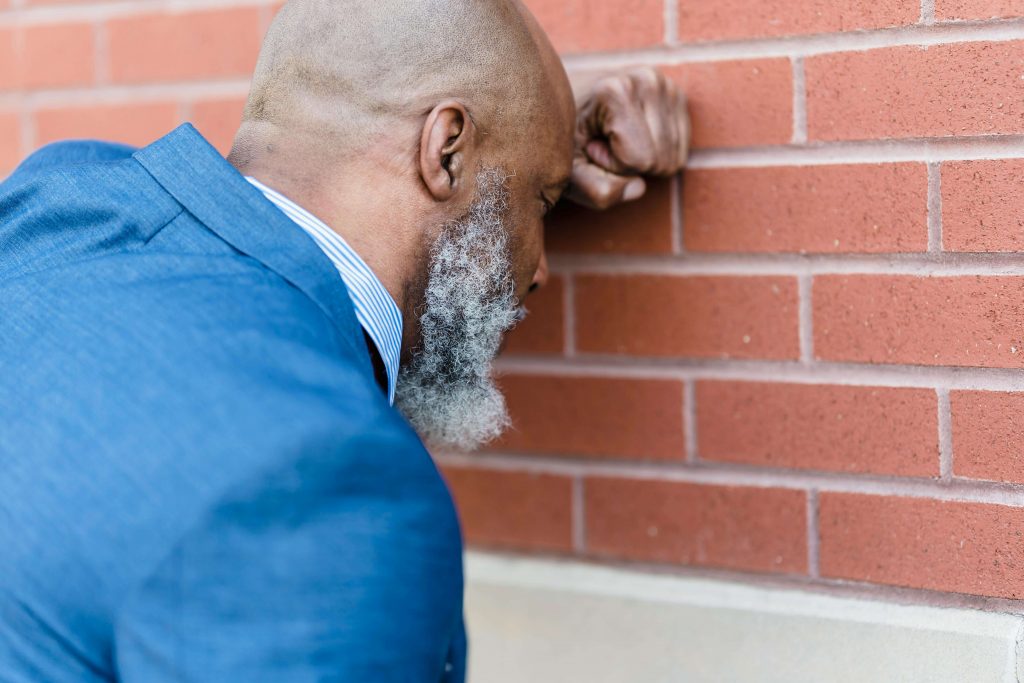
Therapy for emotional shutdown is not about forcing vulnerability or turning men into emotionally dramatic people. It is about rebuilding emotional access gradually and safely. It is about helping the nervous system learn that emotions are survivable and connection does not have to feel dangerous.
That process usually starts with awareness because shutdown often happens automatically. The body reacts before the mind catches up. Men start noticing things like chest tightness, jaw tension, mental fog, numbness, irritability, exhaustion, or urges to leave difficult conversations immediately.
Those are nervous system signals.
Not personal failures.
Rebuilding Connection Without Feeling Overwhelmed
Therapy helps men slow down enough to recognize those signals earlier, before complete shutdown takes over.
Another huge part of this work is emotional tolerance. A lot of men fear emotions because they associate vulnerability with overwhelm, weakness, or loss of control. Stress management therapy for men helps build the ability to experience difficult emotions without immediately escaping, suppressing, or disconnecting from them. That often starts with really simple moments like:
- “I’m overwhelmed right now.”
- “I’m starting to shut down.”
- “I need a minute, but I don’t want to disconnect from you.”
Those moments matter because emotional presence stays intact even during discomfort.
Somatic work is often especially helpful for emotionally shut-down men because emotional suppression lives in the body, too. Chronic tension, numbness, shallow breathing, collapse, hypervigilance, and nervous system dysregulation are all common. Intellectual insight alone usually is not enough because your body still believes emotional openness is unsafe.
Therapy for men in Colorado Springs, CO, helps create repeated experiences of emotional safety, regulation, connection, and repair so the nervous system slowly stops reacting like vulnerability equals danger.
When Anger Is Covering Something Deeper
A lot of men also discover anger sitting on top of deeper emotions. Anger often feels safer than sadness, grief, loneliness, rejection, fear, or shame. As emotional access improves, many men reconnect with emotions they have avoided for years.
Relationships often improve dramatically during this process, too. Communication becomes clearer. Conflict becomes less threatening. Emotional intimacy increases because partners finally feel emotionally present with each other instead of emotionally abandoned during stress.
Many emotionally shut-down men are surprised by how exhausting suppression actually was. Holding yourself together constantly takes enormous nervous system energy. When that pressure begins easing, life often feels lighter, more connected, and more real.
How Stress Management Therapy for Men in Colorado Springs, CO Helps Reduce Shutdown Patterns
Healing emotional shutdown does not mean becoming emotionally fragile. It means becoming emotionally available enough to stay connected to yourself and the people you care about instead of disappearing every time discomfort shows up.
If you are a man in Colorado Springs struggling with emotional numbness, stress, conflict avoidance, relationship disconnection, burnout, or emotional shutdown, working with a men’s counselor at Altitude Counseling can help you rebuild emotional access in a grounded and practical way.
You do not need to force yourself into vulnerability overnight.
You just need to stop abandoning yourself every time emotions become uncomfortable. That is where healing starts.
And over time, that is where deeper connection starts, too.
Begin Stress Management Therapy for Men in Colorado Springs, CO

Men often don’t show stress through visible anxiety. Instead, it can look like shutting down. Going quiet, withdrawing, feeling numb, or becoming irritable. This is usually a protective nervous system response to overwhelm, not a lack of effort or care.
Over time, this pattern can create distance in relationships and make stress harder to process internally. Men may appear “fine” while feeling disconnected or stuck in survival mode. At Altitude Counseling, our therapists are here to help.
Here’s how to get started:
- Schedule a consultation to discuss your shutdown patterns under stress.
- Begin therapy for men in Colorado Springs, CO, to understand your stress response.
- Build tools to stay regulated and emotionally present under pressure.
Stress shutdown doesn’t have to be your default. With support from a therapist for men, you can stay grounded and connected even under pressure.
Mental Health Support at Altitude Counseling in Colorado
At Altitude Counseling, we provide therapy for individuals, couples, and families across Colorado, with in-person services in Colorado Springs and online counseling available statewide.
Our clinicians work with a broad range of concerns, including anxiety, depression, trauma, grief, substance use, relationship issues, and major life transitions. We use evidence-based approaches such as CBT and EMDR to support meaningful, lasting progress.
We also support teens, new mothers, families, and individuals navigating the effects of childhood emotional neglect. Specialized offerings include faith-informed counseling, Internal Family Systems (IFS), and care for spiritual concerns.
Wherever you are in your journey, our team is here to help you build clarity, resilience, and more sustainable emotional well-being.